


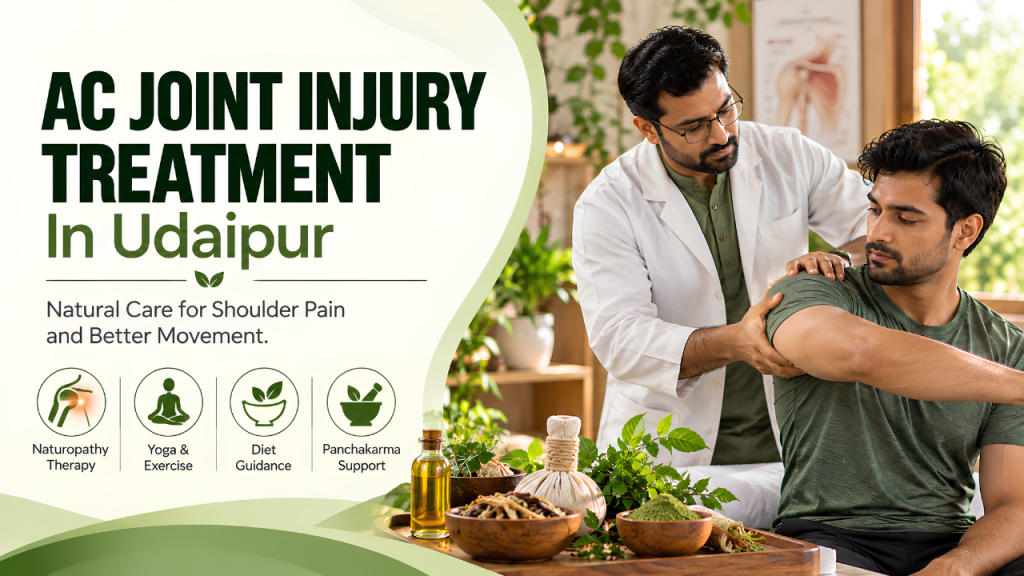
Looking for AC joint injury treatment in Udaipur? An acromioclavicular injury needs individualized care — not a fixed package. This guide covers how Kayakalya Nature Cure assesses, treats and monitors AC joint injury and shoulder pain using naturopathy, yoga, exercise, diet therapy and Panchkarma-supportive therapy.
Why AC Joint Injury Treatment in Udaipur Should Be Individualized
One of the most important reasons to individualize acromioclavicular injury care is that its mechanism and functional demands differ from other causes of shoulder pain. A treatment reasonable for one diagnosis may not suit another.
For someone searching for AC joint injury treatment in Udaipur, three questions matter most: does the symptom pattern fit the diagnosis, is the proposed therapy suitable at the current stage, and does the person have a practical home plan to continue after supervised treatment.
Common Symptoms and Functional Goals
People with AC joint injury may experience pain at the top of the shoulder, tenderness, swelling, pain with cross-body movement and reduced shoulder use. Symptoms can vary with activity, posture, sleep, stress, previous injury and load on the affected tissues.
Useful functional goals include moving the shoulder more comfortably, turning the head, working at a desk, sleeping better, gripping objects, reaching overhead or returning to exercise — a more practical way to track progress than a pain score alone.
Naturopathy Approach for Acromioclavicular Injury
A supportive naturopathy programme for AC joint injury focuses on protecting healing tissue, restoring comfortable movement, rebuilding shoulder strength and returning gradually to activity. Depending on assessment, this may include therapeutic diet guidance, hydrotherapy, selected heat-based measures, gentle yoga, relaxation practices, ergonomic education and an individualized exercise routine.
Panchkarma for AC Joint Injury — Role and Realistic Expectations
Panchkarma may be considered as a complementary option for selected people after assessment. It follows preparatory, main and post-treatment phases and emphasizes individualized selection — it is not one massage or a universal detox session, and not every patient requires every procedure.
For AC joint injury, Panchkarma should never be presented as a guaranteed cure or a way to always avoid medically indicated treatment. Current medicines, recent surgery, pregnancy, major medical conditions and unusual symptoms should be disclosed before treatment begins.
Exercise and Yoga for Shoulder Rehabilitation
Exercise should match the current stage of AC joint injury and the person’s functional capacity — clinician-guided mobility, scapular conditioning and progressive shoulder strengthening, following gradual progression rather than sudden intensity.
Yoga can be adapted for comfortable mobility, breathing, relaxation, posture and body awareness. Advanced positions are not automatically better — if a movement causes sharp or escalating pain, new numbness or weakness, it should be stopped and reviewed. A manageable routine performed consistently is generally more sustainable than occasional high-intensity exercise.
Why Correct Diagnosis Matters for Shoulder Pain
Pain in the neck, shoulder, elbow and arm can overlap across many conditions, so AC joint injury should be approached according to the diagnosis rather than the body region alone. If symptoms don’t follow the expected pattern, or if function is deteriorating quickly, the next step may be medical investigation or specialist referral rather than more intensive natural treatment.
Why Individualized Treatment Matters
People with the same diagnosis can have very different starting points — one person may have mild pain but substantial weakness, another may have severe stiffness after immobilization. An individualized AC joint injury programme combines only the components that make sense for that person: therapeutic exercise, gentle yoga, posture and ergonomic guidance, diet and lifestyle counselling, hydrotherapy, selected heat-based approaches, relaxation strategies and traditional Ayurvedic procedures when appropriate.
Diet, Weight and Lifestyle for AC Joint Injury Recovery
Diet is not a switch that turns a musculoskeletal condition on or off, but a balanced diet therapy plan supports healthy body weight, muscle health, energy and the ability to stay physically active. A practical pattern emphasizes adequate protein, vegetables, fruit, fibre-rich foods, healthy fats and hydration, while limiting highly processed foods and sugary drinks.
Lifestyle habits matter equally — movement breaks, appropriate workstation setup, regular sleep and activity pacing make a rehabilitation plan easier to follow. Supplements and herbal products should always be disclosed to the treating team before starting a new traditional treatment programme.
How Kayakalya Structures AC Joint Injury Treatment
Kayakalya follows a five-step process for every AC joint injury or shoulder rehabilitation case:
- Health Assessment — symptom pattern, duration, functional limitation, previous injury or surgery, medicines and reports.
- Understanding the Affected Area — identifying likely structures involved and any signs needing medical referral.
- Individual Plan — selecting from naturopathy, exercise, yoga, diet, lifestyle guidance and Panchkarma, when suitable.
- Monitoring Progress — shoulder range of motion, grip tolerance, sleep, work tolerance and confidence with daily tasks.
- Long-Term Plan — what to continue at home, what to avoid temporarily, and when reassessment is needed.
Realistic Treatment Expectations
A responsible health website avoids guaranteed claims. The realistic aim of supportive care is to improve comfort, movement, physical capacity, confidence and quality of life — meaningful progress looks like sleeping better, reaching a shelf, turning the head comfortably, returning to work, or gripping objects, rather than a fixed percentage promise.
When Specialist or Urgent Care Is Important
🚨 Seek prompt medical assessment for:
- Severe or sudden pain, or major trauma
- Suspected fracture or dislocation, or visible shoulder deformity
- Fever with a hot or swollen area
- Rapidly worsening weakness or new neurological symptoms
- Marked swelling, colour change or unusual temperature change in the arm
People recovering from surgery should follow surgeon-approved restrictions, and people taking prescription medicines should never stop or replace them simply because a natural therapy has started. Coordinated care is the safest approach.
Practical Home Plan Between Treatment Sessions
Choose one or two functional goals and track them — reaching overhead, turning the head, sitting comfortably, gripping an object, sleeping better or completing work tasks. Progress gradually: if activity is tolerated well, increase the amount slowly; if an exercise repeatedly causes a flare, review the dose, technique or selection.
If symptoms suddenly change, neurological weakness develops, fever occurs, major swelling appears or function deteriorates unexpectedly — seek appropriate medical assessment rather than simply increasing home therapy.
Building Long-Term Shoulder, Neck and Upper-Limb Health
Once symptoms become more manageable, the aim shifts from symptom management toward maintaining strength, mobility and confidence through habits that fit normal life — regular position changes for desk work, gradual conditioning for manual work, and staged return to sport based on strength rather than a calendar date.
Follow-up is especially useful when symptoms are persistent, recurrent or associated with neurological changes. The warning symptoms for this condition include new weakness, major swelling, fever, significant trauma or rapidly changing neurological symptoms — these features deserve appropriate medical assessment.
FAQs About AC Joint Injury Treatment in Udaipur
Can Panchkarma cure AC joint injury permanently?
No — no treatment should be marketed as a guaranteed permanent cure. Panchkarma may be considered as a complementary supportive component after assessment, alongside necessary medical care.
Is naturopathy suitable for AC joint injury?
Yes, for many people, as supportive care — but the programme should be individualized around diagnosis, symptoms, medicines, previous injury or surgery and overall health.
Can I continue my regular medicines during treatment?
Yes — do not stop, reduce or replace prescribed medicines without discussing changes with the prescribing clinician. Tell the Kayakalya team about all medicines and supplements.
How long does AC joint injury treatment take?
There is no single duration for every patient — Panchkarma programmes typically range from approximately 7 to 28 days depending on individual requirements, decided after assessment.
Should I stop exercising because I have shoulder pain?
Not necessarily — appropriate movement is often an important part of rehabilitation, but type and intensity should match the diagnosis. Severe or unusual symptoms require professional assessment.
When should I seek urgent medical care for a shoulder injury?
Seek prompt assessment for visible deformity, severe pain after trauma, major swelling, numbness or inability to use the arm.
Ready to Start Your AC Joint Injury Recovery in Udaipur?
Book a one-on-one assessment with Kayakalya Nature Cure and get an individualized naturopathy, yoga, exercise, diet and Panchkarma-supportive plan.