


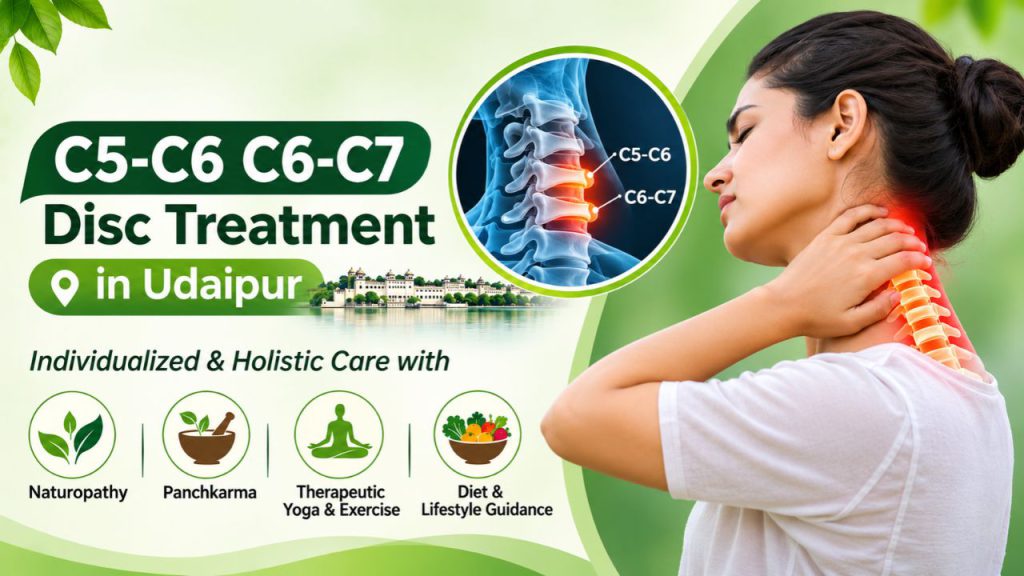
Disc changes at the C5-C6 and C6-C7 levels of the cervical spine can cause neck discomfort, stiffness, shoulder pain, radiating arm pain, tingling or numbness. In some cases, these changes may also irritate nearby nerve structures and affect everyday activities.
At Kayakalya Nature Cure, Udaipur, the approach to C5-C6 C6-C7 Disc Treatment in Udaipur focuses on individual assessment and supportive care. Depending on the person’s condition, an individualized programme may include naturopathy, therapeutic exercises, gentle yoga, dietary guidance and lifestyle modifications, with Panchkarma considered only when appropriate.
The aim is to support comfortable movement, improve functional ability and encourage sustainable health habits without promising a guaranteed cure or replacing medically necessary treatment.
🦴 Understanding C5-C6 and C6-C7 Disc Problems
The cervical spine consists of seven vertebrae in the neck. Intervertebral discs between these vertebrae provide cushioning and help maintain flexibility.
C5-C6 and C6-C7 are lower cervical disc levels that experience considerable movement and mechanical loading. Changes at these levels may include disc degeneration, bulging or herniation. Depending on their nature and severity, these changes may affect nearby nerves.
📌 Key Point
A person experiencing symptoms should not assume that every episode of neck pain is caused by a cervical disc problem. A proper clinical assessment helps determine whether symptoms are related to the disc, surrounding muscles, joints or another underlying condition.
For individuals considering cervical disc treatment in Udaipur, understanding the diagnosis is an important first step before selecting any supportive therapy. People specifically searching for C5-C6 disc treatment in Udaipur should also have their symptoms and available investigation reports evaluated before choosing a treatment approach.
🔍 Common Symptoms of C5-C6 and C6-C7 Disc Conditions
Symptoms can vary depending on the affected disc, the degree of nerve involvement and the person’s overall health.
Common symptoms may include:
- 🔸 Persistent or recurring neck pain.
- 🔸 Stiffness and restricted neck movement.
- 🔸 Pain extending towards the shoulders.
- 🔸 Pain radiating into the arms or hands.
- 🔸 Tingling or numbness in the fingers.
- 🔸 Reduced grip strength in some cases.
- 🔸 Muscle weakness or difficulty performing certain activities.
Not everyone experiences all these symptoms. Some individuals may have disc changes on imaging without significant symptoms.
An assessment should consider symptom duration, severity, movement limitations, previous injuries and available medical reports. Individuals looking for C6-C7 disc treatment in Udaipur should also receive an appropriate assessment to understand whether their symptoms are associated with this particular disc level.
🩺 Why Individualized Assessment Matters
Two individuals with similar MRI findings may experience very different symptoms and functional limitations.
One person may primarily experience neck stiffness, while another may have radiating arm pain or neurological symptoms requiring closer medical supervision.
An individualized assessment can consider:
- ✅ Medical history and symptom duration.
- ✅ Previous injuries or spinal surgery.
- ✅ Current medicines and existing medical conditions.
- ✅ Neck and upper-back movement limitations.
- ✅ Muscle strength and functional ability.
- ✅ Sleep quality and daily activity levels.
- ✅ Available MRI or other investigation reports.
This assessment-first approach helps determine whether supportive naturopathy is appropriate or whether further medical evaluation is necessary.
For people seeking C5-C6 C6-C7 Disc Treatment in Udaipur, the focus should be on selecting suitable care rather than following a fixed treatment protocol.
🌿 Naturopathy Approach for Cervical Disc Problems
Naturopathy may form part of a supportive care programme for selected individuals with cervical disc-related symptoms.
At Kayakalya Nature Cure, the programme may include selected therapies based on individual assessment, functional capacity and medical considerations.
Possible supportive components include:
- 🌱 Therapeutic diet guidance.
- 🌱 Gentle and appropriate movement practices.
- 🌱 Selected hydrotherapy applications.
- 🌱 Relaxation and breathing practices.
- 🌱 Lifestyle and activity guidance.
- 🌱 Individualized exercise routines.
- 🌱 Appropriate heat-based measures when suitable.
The purpose of these interventions is to support general well-being, relaxation, comfortable movement and sustainable self-care.
📌 Key Point
Naturopathy for cervical disc problems should be considered complementary care. It should not be represented as a method of physically removing a disc bulge, reversing structural degeneration or decompressing an affected nerve.
Individuals with significant neurological symptoms or conditions requiring specialist treatment should receive appropriate medical care.
🪔 Role of Panchkarma in Cervical Disc Care
Panchkarma is a traditional Ayurvedic therapeutic system involving preparatory, main and post-treatment phases.
For selected individuals, Panchkarma may be considered as a complementary component of a broader wellness programme after an appropriate assessment.
The suitability of Panchkarma for cervical disc problems depends on several factors, including:
- 🔸 The person’s overall health.
- 🔸 The nature and severity of symptoms.
- 🔸 Previous surgery or injury.
- 🔸 Current medicines.
- 🔸 Existing medical conditions.
- 🔸 Any neurological involvement.
Not every person requires every Panchkarma procedure. The selection should be individualized, and appropriate medical advice should be obtained when necessary.
⚠️ Important
Panchkarma should not be promoted as a guaranteed cure for cervical disc degeneration or as an alternative to medically indicated surgery or specialist treatment.
🧘 Exercise and Yoga for Cervical Disc Conditions
Appropriate movement can be an important part of long-term rehabilitation for individuals experiencing cervical disc-related symptoms.
The objective is to improve functional capacity gradually without forcing movements that aggravate symptoms.
Depending on the assessment, a suitable programme may include:
Advanced spinal positions, aggressive stretching and forceful neck movements should not automatically be considered beneficial.
If an exercise causes sharp pain, increasing radiating symptoms, new numbness or weakness, it should be stopped and reviewed by an appropriately qualified professional.
After spinal surgery, all exercise and rehabilitation activities should follow the surgeon’s instructions.
🥗 Diet and Lifestyle Considerations
Diet and daily habits can influence general health, body weight, muscle function and the ability to maintain an appropriate activity routine.
- 🥦 Adequate protein for muscle health.
- 🥦 Fresh vegetables and fruits.
- 🥦 Fibre-rich food sources.
- 🥦 Appropriate healthy fats.
- 🥦 Sufficient hydration.
- 🥦 Balanced meals suited to individual nutritional requirements.
Diet should not be presented as a way to directly repair a damaged cervical disc or reverse structural changes.
Lifestyle modifications are also important. Long periods of sitting, inadequate sleep, inactivity and sudden increases in physical activity may affect a person’s ability to manage musculoskeletal symptoms.
Practical changes can include taking regular movement breaks, maintaining comfortable working positions, managing activity levels and following an appropriate home exercise routine.
People using prescription medicines should discuss supplements and herbal products with their healthcare professionals before taking them.
🎯 Understanding the Importance of Correct Diagnosis
Neck pain does not always indicate a cervical disc problem. Similar symptoms can arise from muscles, joints, nerves and other medical conditions.
A proper assessment helps distinguish between different causes and identify whether additional investigations or specialist consultations are required.
People considering cervical disc problem treatment should understand that the treatment approach depends on the underlying diagnosis, symptom severity and functional limitations.
For individuals exploring cervical disc treatment in Udaipur, MRI findings should be interpreted alongside clinical symptoms and examination findings rather than considered in isolation.
When symptoms are unusual, rapidly worsening or accompanied by neurological changes, medical evaluation should take priority over routine wellness treatment.
Individuals experiencing persistent neck discomfort should also understand that neck pain treatment in Udaipur needs to be based on the underlying cause rather than symptoms alone.
🧭 How Kayakalya Structures an Individualized Programme
At Kayakalya Nature Cure, an individualized programme can be organized around five important steps.
1Initial Health Assessment
The process begins with understanding the person’s symptoms, medical history, previous treatment, current medicines and available investigation reports.
2Understanding Functional Limitations
The next step involves identifying movement restrictions, activity-related difficulties, discomfort and other relevant concerns.
3Individualized Care Planning
Based on the assessment, suitable supportive components may be selected. These may include naturopathy, gentle yoga, therapeutic exercises, dietary guidance and lifestyle modifications.
Naturopathy for cervical disc problems should be tailored to the individual’s condition, functional capacity and medical requirements. Panchkarma may also be considered when appropriate.
4Monitoring Progress
Progress can be evaluated through functional improvements such as sitting tolerance, comfortable movement, sleep quality, exercise tolerance and the ability to perform everyday activities.
5Long-Term Self-Care Planning
Individuals are guided towards maintaining appropriate movement, healthy daily habits and a manageable home routine.
The programme should remain flexible and be adjusted according to individual progress and medical advice.
📊 Realistic Expectations from Supportive Care
Every individual responds differently to treatment and rehabilitation.
The potential benefits of a supportive programme should be discussed realistically and may include improvements in:
- ✅ Comfortable movement.
- ✅ Daily activity tolerance.
- ✅ Physical conditioning.
- ✅ Relaxation and general well-being.
- ✅ Confidence in performing routine activities.
- ✅ Long-term lifestyle management.
Results depend on the diagnosis, severity of the condition, duration of symptoms, overall health and consistency with appropriate rehabilitation.
Neither naturopathy nor Panchkarma should be presented as a guaranteed solution for structural cervical disc changes.
🚨 When Should You Seek Specialist Medical Attention?
Certain symptoms require prompt medical assessment rather than routine wellness treatment.
⚠️ SEEK APPROPRIATE MEDICAL ATTENTION IF YOU EXPERIENCE:
- 🔺 Progressive weakness in the arms or legs.
- 🔺 Difficulty walking or maintaining balance.
- 🔺 Rapidly worsening neurological symptoms.
- 🔺 Significant injury or trauma.
- 🔺 New bowel or bladder control problems.
- 🔺 Severe or sudden pain accompanied by other concerning symptoms.
People with significant nerve compression may require evaluation by an orthopedic specialist, neurologist or neurosurgeon.
Do not discontinue prescribed medicines or delay recommended medical or surgical treatment because you have started a complementary wellness programme.
🏡 Practical Home Care and Long-Term Spine Health
Daily habits play an important role in maintaining physical activity and supporting long-term functional health.
A practical home routine may include:
💡 Tip: A temporary increase in discomfort does not necessarily indicate structural damage, but new or worsening neurological symptoms should never be ignored.
Long-term improvement should focus on appropriate movement, functional ability and sustainable lifestyle habits rather than unrealistic promises.
❓ Frequently Asked Questions About C5-C6 and C6-C7 Disc Conditions
Can Panchkarma permanently cure C5-C6 or C6-C7 disc problems?
Panchkarma should not be considered a guaranteed permanent cure for cervical disc conditions. It may be considered a complementary option for selected individuals following an appropriate assessment.
Is naturopathy suitable for cervical disc problems?
It may be considered supportive care for selected individuals. The programme should be individualized according to symptoms, diagnosis, medical history and overall health.
Can I continue my regular medicines during naturopathy treatment?
Do not stop, reduce or replace prescribed medicines without consulting the prescribing healthcare professional. Inform your care team about all medicines and supplements you use.
How long does cervical disc treatment take?
There is no standard treatment duration for everyone. The appropriate duration depends on the diagnosis, severity of symptoms, functional limitations and individual response to the programme.
Should I stop exercising if I experience neck pain?
Not necessarily. Appropriate movement can be part of rehabilitation, but exercise selection and intensity should be based on professional assessment. Stop movements that cause sharp or worsening symptoms and seek guidance.
When should I seek urgent medical attention?
Seek prompt medical assessment if you experience progressive weakness, difficulty walking, new bowel or bladder problems, significant trauma or rapidly worsening neurological symptoms.
📞 Book an Individualized Assessment at Kayakalya Nature Cure, Udaipur
If you are considering C5-C6 C6-C7 Disc Treatment in Udaipur, the first step is understanding your diagnosis and identifying which supportive care options may be suitable for your condition.
Kayakalya Nature Cure follows an individualized approach that may combine naturopathy, therapeutic exercise, yoga, dietary guidance and lifestyle modifications, with Panchkarma considered when appropriate.
The focus is on responsible care, realistic expectations, functional improvement and long-term self-care.
🌿 Contact Kayakalya Nature Cure
Phone: +91-7220-951-951
Location: Udaipur, Rajasthan
Call or WhatsApp to enquire about an individualized assessment.
📋 Evidence and Safety Note
This page provides general educational information about cervical disc conditions and supportive wellness approaches. It does not replace medical examination, diagnosis or individualized treatment recommendations.
Naturopathy, yoga, exercise, dietary guidance and Panchkarma should be considered according to individual suitability. They should not delay necessary specialist assessment, prescribed treatment or medically indicated surgery.
All treatment decisions should be made with appropriately qualified healthcare professionals.