


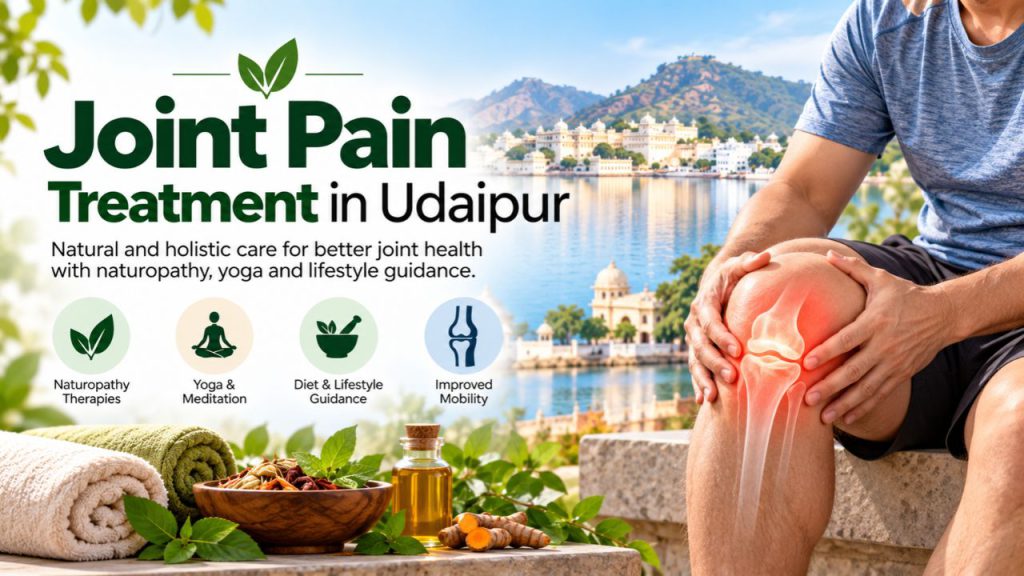
Joint pain can make everyday activities such as walking, climbing stairs, standing for long periods, and completing household tasks uncomfortable. If you are looking for Joint Pain Treatment in Udaipur, understanding the underlying cause is an important first step towards choosing appropriate care. Joint discomfort may result from osteoarthritis, inflammatory conditions, injuries, repetitive strain, or other health problems, and each may require a different approach.
At Kayakalya Nature Cure, individuals can enquire about naturopathy and supportive wellness approaches that may complement an appropriate joint-care plan. Depending on individual needs, these may include lifestyle guidance, balanced nutrition, relaxation practices, and suitable physical activity. These approaches should be considered alongside appropriate medical assessment and treatment rather than as replacements for them.
This guide explains common causes of joint pain, supportive natural approaches, practical self-care measures, and symptoms that require medical attention.
🦴 What Is Joint Pain?
Joint pain refers to discomfort, stiffness, tenderness, or swelling in the areas where bones meet. It can affect one joint or several joints simultaneously. Symptoms may develop gradually or appear suddenly following an injury or illness.
Commonly affected areas include:
Some people experience stiffness after waking up or sitting for a long time, while others notice discomfort mainly during movement. The location, duration, severity, and associated symptoms can help a healthcare professional determine the possible cause.
🔍 Common Causes of Joint Pain
📌 Key Point
Joint pain is a symptom rather than a diagnosis. Identifying its cause helps determine which treatments and lifestyle measures may be appropriate.
1Osteoarthritis
Osteoarthritis involves changes in cartilage and other tissues within a joint. It commonly affects the knees, hips, and hands. Symptoms may include activity-related pain, stiffness after rest, and difficulty moving the affected joint.
Management may include individually tailored therapeutic exercise, strengthening activities, appropriate weight management when needed, and medical treatment based on the person’s condition. Regular, suitable exercise is an important part of osteoarthritis management. Read the NICE osteoarthritis recommendations.
2Rheumatoid Arthritis
Rheumatoid arthritis is an autoimmune condition that causes inflammation in the joints. It may produce swelling, tenderness, warmth, and prolonged morning stiffness. Several joints may be affected.
Early medical assessment is important because appropriate treatment can help control inflammation and reduce the risk of joint damage. Dietary changes, relaxation, and other wellness measures may support general well-being but must not replace prescribed treatment.
3Injuries and Overuse
Falls, sports injuries, repetitive movements, and sudden increases in physical activity can affect the joints and surrounding tissues. Symptoms may include pain, swelling, bruising, or restricted movement.
The appropriate response depends on the type and severity of the injury. Severe pain following an injury, suspected fracture, or difficulty bearing weight requires prompt medical attention.
4Gout and Other Inflammatory Conditions
Gout can cause sudden, intense pain, redness, and swelling, often in the big toe but sometimes in other joints. Other inflammatory conditions can also cause persistent discomfort and stiffness.
A suddenly hot, red, or swollen joint—especially when accompanied by fever or feeling unwell—requires urgent medical assessment because a joint infection is one possible cause.
5Age and Lifestyle Factors
Age-related changes, muscle weakness, inactivity, repetitive strain, and excess body weight may contribute to joint symptoms. However, pain should not automatically be attributed to ageing or lifestyle. Persistent or unexplained symptoms deserve proper assessment.
🩺 Joint Pain Treatment in Udaipur: Why Individual Assessment Matters
An appropriate care plan begins by understanding where the pain occurs, when it started, how it affects daily activities, and whether other symptoms are present.
A healthcare professional may ask about previous injuries, morning stiffness, joint swelling, existing medical conditions, and current medicines. Depending on the findings, a physical examination, blood tests, X-rays, or other investigations may be appropriate.
For example, knee pain associated with osteoarthritis may require a different approach from joint swelling caused by rheumatoid arthritis or gout. Treating symptoms without identifying the cause can delay appropriate care.
Before starting a joint-care programme, consider these questions:
- ✅ Has the underlying cause of the pain been assessed?
- ✅ Which activities are suitable for my current condition?
- ✅ Would physiotherapy or therapeutic exercise be helpful?
- ✅ Are complementary wellness approaches appropriate for my diagnosis?
- ✅ How will progress and worsening symptoms be monitored?
At Kayakalya Nature Cure, you can enquire about available naturopathy and wellness services. Their suitability should be considered in light of your health needs and any recommendations from your treating healthcare professional.
🌿 Can Naturopathy Support Joint Health?
Naturopathy commonly emphasizes lifestyle, nutrition, physical activity, and selected natural therapies. Some lifestyle measures can complement established joint-care plans, but evidence varies between individual therapies. No natural treatment should be presented as a guaranteed cure for arthritis, cartilage damage, or every type of joint pain.
🧘 1. Gentle Movement and Therapeutic Exercise
Appropriate exercise can help maintain muscle strength, flexibility, and physical function. Depending on the diagnosis, a healthcare professional or physiotherapist may recommend strengthening exercises, gentle range-of-motion movements, walking, or other low-impact activities.
Yoga-based movements may be considered when adapted to the person’s mobility and medical condition. Avoid forcing a painful joint into a position or continuing an exercise that substantially worsens symptoms. Recent injuries, severe inflammation, and certain joint conditions may require modified activity.
For osteoarthritis, NICE recommends therapeutic exercise tailored to the individual’s needs. View the clinical recommendations.
🥗 2. Balanced Nutrition
A balanced diet supports general health, bone health, and muscle function. Include a variety of vegetables, fruits, whole grains, protein sources, and other nutrient-rich foods according to your individual needs, as in a professionally designed naturopathy diet plan.
No single food can cure joint pain. Herbal products and supplements should not automatically be assumed to be safe or effective. Consult a qualified healthcare professional before taking them, particularly if you use prescribed medicines or have kidney, liver, or other chronic conditions.
⚖️ 3. Healthy Weight Management
For people with osteoarthritis who are overweight, gradual weight loss may help reduce pressure on weight-bearing joints and improve physical function. A realistic approach combining appropriate nutrition and suitable activity is generally more sustainable than restrictive diets.
Weight management should be individualized according to mobility, nutritional requirements, age, and other health conditions.
🔥 4. Heat and Cold Applications
Heat may provide temporary comfort for some types of stiffness, while a cold pack may help with certain minor injuries or episodes of swelling.
For a minor injury, wrap a cold pack in a towel and apply it for up to 20 minutes at a time. Never apply ice directly to the skin. Avoid extreme temperatures, particularly if you have reduced sensation or circulation problems.
Do not rely on home applications to manage a suddenly hot, red, or swollen joint without medical assessment.
😴 5. Relaxation and Daily Routine
Adequate sleep, relaxation, and a manageable daily routine may help people cope with persistent discomfort. These practices can support general well-being but should not be treated as a substitute for treatment that addresses the underlying joint condition.
Before starting a wellness programme, discuss your diagnosis, current medicines, and any movement restrictions with your healthcare professional.
🌼 Seven Practical Habits for Healthier Joints
Small, consistent habits may support joint function and everyday mobility.
💡 Tip: These measures may complement appropriate care, but they cannot replace diagnosis or condition-specific treatment.
🚨 When Should You Seek Medical Attention?
Do not delay medical care if joint symptoms are severe, unusual, or rapidly worsening.
⚠️ SEEK URGENT MEDICAL ATTENTION IF YOU EXPERIENCE:
- 🔺 Sudden severe pain with a hot, red, or swollen joint.
- 🔺 Joint pain accompanied by fever, chills, or feeling significantly unwell.
- 🔺 Severe pain after a fall or injury.
- 🔺 An inability to walk or put weight on the affected joint.
- 🔺 A joint that appears deformed after an injury, or new numbness around the injured area.
Arrange a medical appointment if the pain keeps returning, worsens over time, affects sleep or everyday activities, or does not improve after about two weeks of appropriate home care. Morning stiffness lasting more than 30 minutes also warrants assessment.
🏥 Why Consider Kayakalya Nature Cure in Udaipur?
Choosing care for joint discomfort involves understanding the cause of the symptoms, considering suitable treatment options, and receiving guidance that accounts for individual needs.
Kayakalya Nature Cure in Udaipur offers naturopathy and wellness services. You can enquire about available lifestyle guidance, nutrition-related advice, gentle movement, and selected complementary approaches.
Before beginning a programme, share your medical history, current medicines, previous treatments, and any recommendations from your treating doctor. Ask which services may be suitable for your condition, what benefits can reasonably be expected, and how progress will be reviewed.
📌 Key Point
For conditions such as rheumatoid arthritis, gout, and advanced osteoarthritis, complementary wellness care should not delay or replace necessary medical treatment.
📞 Enquire About Joint Pain Care at Kayakalya Nature Cure
Persistent joint discomfort can affect independence, comfort, and participation in everyday activities. Understanding the possible cause and choosing appropriate care can help you make informed decisions about your health.
If you are exploring Joint Pain Treatment in Udaipur, contact Kayakalya Nature Cure to enquire about its available services and consultation options. If you have not received a diagnosis, arrange an appropriate medical assessment before beginning a treatment programme.
🌿 Kayakalya Nature Cure
Address: 13, 14, 15, Tulsi Roop Villa, Adarsh Colony, opposite Aravali Heights Complex, near RK Circle Petrol Pump, Pulla, Udaipur, Rajasthan – 313001.
Phone: +91-7220-951-951
Alternative contact: +91-9587-165-000
Website: https://kayakalya.com/
❓ Frequently Asked Questions
1. What is the best treatment for joint pain?
The appropriate treatment depends on the cause. Osteoarthritis, rheumatoid arthritis, gout, injuries, and joint infections require different approaches. A healthcare professional can identify the likely cause and recommend suitable treatment.
2. Can naturopathy help with joint pain?
Some lifestyle measures and complementary approaches may support general well-being or mobility for certain people. Benefits vary, and evidence differs between therapies. Naturopathy should not replace necessary medical treatment.
3. What causes knee pain and joint stiffness?
Possible causes include osteoarthritis, injuries, overuse, inflammation, and other musculoskeletal conditions. Persistent pain, swelling, or restricted movement should be assessed to identify the underlying problem.
4. Is exercise safe for people with joint pain?
Appropriate exercise can help maintain strength and mobility, but the type and intensity should match the person’s condition. Seek professional advice if you have significant swelling, severe pain, a recent injury, or difficulty bearing weight.
5. When should I seek medical attention for joint pain?
Seek urgent care for a hot, swollen joint with fever or feeling unwell, severe injury-related pain, or an inability to bear weight. Arrange a medical appointment for persistent, worsening, recurrent, or unexplained symptoms.
6. How can I enquire about joint-care services at Kayakalya Nature Cure?
Contact Kayakalya Nature Cure at +91-7220-951-951 or +91-9587-165-000 to ask about available services and consultation options.