


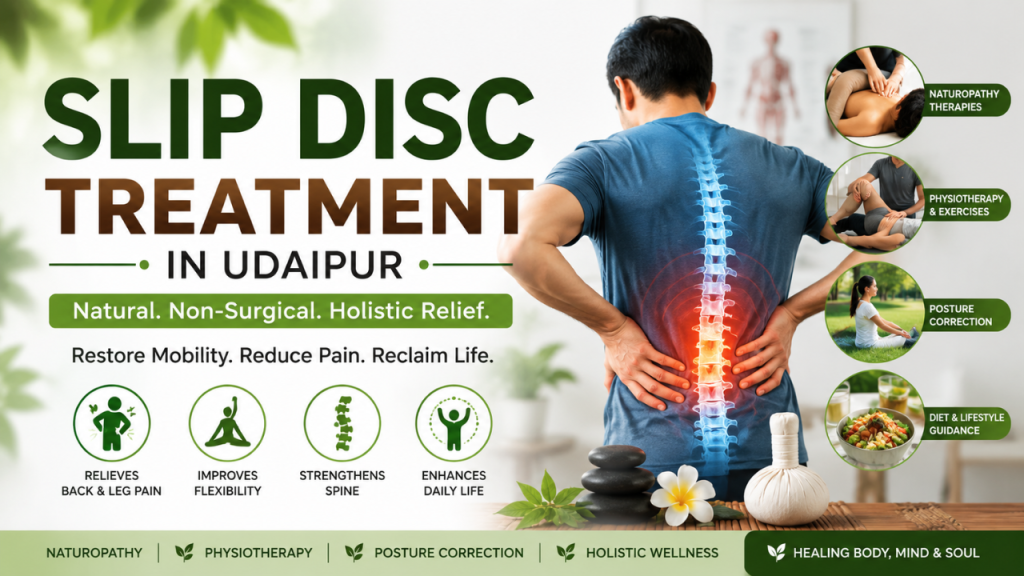
A closer look at how a natural, non-invasive approach may support slipped disc recovery, what happens during conservative care, and when medical or surgical intervention may become necessary.
A dull ache in the lower back that develops into sharp, shooting pain down one leg can be uncomfortable and concerning. For many people, the possibility of surgery is also a major worry, leading them to explore conservative treatment options first.
This is why many people consider slip disc treatment in Udaipur that focuses on non-surgical approaches. Depending on the severity of the condition and the presence of nerve-related symptoms, a structured combination of therapy, guided movement, posture correction, and lifestyle modification may help reduce discomfort, improve mobility, and support recovery.
However, every case is different. A proper medical assessment is essential before beginning any treatment program, particularly when symptoms include significant numbness, weakness, or changes in bladder or bowel function.
🦴 What Exactly Is a Slip Disc?
Between each pair of vertebrae sits a soft, cushion-like structure called an intervertebral disc. These discs help absorb shock and allow the spine to bend and move comfortably.
Over time, factors such as poor posture, prolonged sitting, improper lifting techniques, repetitive strain, injury, or age-related changes may weaken the outer layer of a disc. This can allow the softer inner material to bulge or protrude outward.
If the affected disc irritates or compresses a nearby nerve root, symptoms may include:
- 🔸 Lower back pain
- 🔸 Stiffness or restricted movement
- 🔸 Tingling or numbness
- 🔸 Burning or shooting pain travelling down one leg (often described as sciatica)
- 🔸 Muscle weakness in more severe cases
📌 Key Point
Despite the commonly used term “slip disc,” the disc does not literally slip out of position. The condition generally involves a bulging or herniated disc that may irritate nearby nerves.
🩺 Can a Slip Disc Be Treated Without Surgery?
While surgery may be necessary in certain cases, many people with a slipped or herniated disc may initially be managed with conservative treatment, depending on their symptoms, neurological findings, and medical evaluation.
A structured slip disc treatment without surgery generally focuses on reducing pain and inflammation, relieving muscle tension, improving mobility, and strengthening the muscles that support the spine.
Conservative care may involve a combination of physiotherapy, guided exercises, posture correction, lifestyle changes, and selected naturopathic therapies under professional supervision.
⚠️ When Surgery May Be Considered
Surgical intervention may be considered when there is progressive nerve damage, significant or worsening muscle weakness, severe symptoms that do not respond to appropriate conservative care, or loss of bladder or bowel control.
The goal of non-surgical care is not simply to provide temporary pain relief. It is also to address contributing factors such as poor posture, weak supporting muscles, prolonged sitting, and improper movement patterns that may increase stress on the spine.
🌿 How Naturopathy May Support Slip Disc Recovery
A structured naturopathy treatment for slip disc generally does not depend on a single therapy. Instead, it may combine different supportive approaches based on the individual’s condition, symptoms, and overall health.
At a professional nature cure centre in Udaipur, the treatment plan may include the following stages:
1Assessment and Pain Mapping
The process begins with an evaluation of symptoms, movement limitations, pain patterns, and possible nerve involvement.
The assessment also helps identify warning signs that may require further medical investigation or specialist attention before conservative treatment is considered. At Kayakalya this is carried out by our BNYS-qualified doctors and certified therapists.
2Acute-Phase Pain Management
During the initial phase, the focus is usually on reducing discomfort and muscle tension while avoiding movements that aggravate the affected area.
Depending on individual suitability, supervised therapies such as warm applications and gentle therapeutic techniques may be used to promote relaxation and support pain management.
3Structured Movement and Physiotherapy
As symptoms become manageable, guided stretching, mobility exercises, and progressive strengthening may be introduced.
Strengthening the core and supporting back muscles can help improve spinal stability and movement patterns. Physiotherapy and therapeutic exercise therefore play an important role in a comprehensive natural treatment for slip disc.
4Posture and Lifestyle Correction
Daily habits can significantly affect spinal health.
Sitting posture, workstation ergonomics, lifting techniques, sleeping positions, and everyday movement patterns may need to be corrected to reduce unnecessary strain on the lower back.
💡 Tip: This structured approach is what makes conservative care different from a quick-fix treatment. The objective is to support recovery while also helping patients develop healthier movement and lifestyle habits. For patients who need daily supervision, our IPD / residential care in Udaipur allows therapy, rest, and diet to be monitored together.
💆 Therapies Commonly Used in Non-Surgical Slip Disc Care
Depending on the individual’s condition and professional assessment, supportive therapies may include:
The appropriate combination of therapies varies from person to person. Not every therapy is suitable for every type or stage of disc problem, which is why professional assessment and supervision are important.
👥 Who May Benefit from Non-Surgical Slip Disc Treatment?
A structured slip disc treatment in Udaipur without surgery may be considered for people whose condition is suitable for conservative management following appropriate evaluation.
This approach may be suitable for:
- ✅ People experiencing mild to moderate symptoms without serious neurological complications
- ✅ Individuals in the earlier stages of back pain or disc-related symptoms
- ✅ People whose symptoms change with posture, prolonged sitting, or certain activities
- ✅ Those looking to explore conservative options before considering surgery
- ✅ Individuals seeking a naturopathy treatment for slip disc alongside appropriate medical monitoring
The suitability of any treatment depends on the severity of the disc problem, the degree of nerve involvement, overall health, and individual symptoms.
A proper diagnosis should always come first.
🚨 When Should You Seek Urgent Medical Care?
Most cases of back pain do not require emergency treatment. However, certain symptoms associated with a slipped or herniated disc require prompt medical evaluation.
⚠️ SEEK URGENT MEDICAL ATTENTION IF YOU EXPERIENCE:
- 🔺 New or rapidly worsening weakness in the legs
- 🔺 Significant or progressive numbness
- 🔺 Loss of bladder or bowel control
- 🔺 Numbness around the groin or saddle area
- 🔺 Severe pain following a significant injury
- 🔺 Rapidly worsening neurological symptoms
These symptoms may indicate serious nerve compression and should not be managed solely through home remedies or conservative therapies without medical assessment.
🏡 Simple Habits to Support Spine Recovery at Home
Alongside a professionally supervised treatment plan, certain everyday habits may help reduce unnecessary strain on the spine.
🪑 Avoid Prolonged Sitting
Try not to remain seated in the same position for extended periods. Take regular breaks to stand, walk, and gently change position.
🛏️ Use a Supportive Sleeping Setup
Choose a supportive mattress and a comfortable sleeping position that helps maintain natural spinal alignment.
📦 Lift Objects Correctly
Avoid bending forward from the waist when lifting heavy objects. Instead, bend your knees, keep the object close to your body, and avoid sudden twisting movements.
🚶 Stay Gently Active
When medically appropriate, gentle walking and guided movement can help maintain mobility and prevent excessive deconditioning.
⚖️ Maintain a Healthy Body Weight
Maintaining a healthy weight may help reduce unnecessary mechanical stress on the lower back and supporting joints.
These habits do not replace professional treatment when pain or neurological symptoms are significant. However, they can support recovery and may help reduce the risk of recurring strain.
❓ Frequently Asked Questions About Slip Disc Treatment
Can a slip disc really heal without surgery?
Many people with mild to moderate disc-related symptoms can improve with appropriate conservative management. Treatment may include physiotherapy, guided exercises, posture correction, activity modification, and other supportive therapies.
Surgery may be considered when there is significant nerve compression, progressive neurological symptoms, or when appropriate conservative care does not provide sufficient improvement.
How long does natural recovery from a slip disc take?
Recovery time varies from person to person. It depends on factors such as the severity and location of the disc problem, nerve involvement, overall health, activity levels, and response to treatment.
Some people may experience improvement within several weeks, while others may require a longer period of rehabilitation and strengthening.
Is bed rest recommended for a slipped disc?
Prolonged bed rest is generally not encouraged for most cases because extended inactivity may lead to muscle weakness and stiffness. Depending on the individual’s condition, gentle movement and gradual return to activity under professional guidance may be more appropriate.
When is surgery necessary for a slipped disc?
Surgery may be considered in cases involving progressive nerve damage, significant muscle weakness, loss of bladder or bowel control, or persistent symptoms that have not responded adequately to an appropriate period of conservative treatment. The decision should be made after evaluation by a qualified medical professional or spine specialist.
🎯 The Bottom Line
✔ Key Takeaways
- ✅ A slipped disc can be painful and disruptive, but surgery is not automatically required in every case.
- ✅ For appropriately selected patients, a disciplined and professionally supervised slip disc treatment in Udaipur that combines supportive therapies, physiotherapy, guided movement, posture correction, and lifestyle modification may help manage symptoms and support better mobility.
- ✅ The most important step is to begin with a proper assessment. Understanding the severity of the condition and identifying any nerve involvement can help determine whether conservative care is appropriate or whether specialist medical intervention is required.
- ✅ With the right diagnosis, professional supervision, and consistent lifestyle changes, many people can take meaningful steps toward better spinal health and improved daily movement.
🌿 Kayakalya Nature Cure, Udaipur
Struggling With Back Pain or a Slipped Disc?
Book an assessment with our expert naturopathy and physiotherapy team to find out whether non-surgical, conservative care is suitable for your condition.